
Flight of high-paying banking jobs to other European cities will hurt the prospects of Indian real estate developers and desis in the hospitality business in the UK, says Kunal Bose.

After Maharashtra, analysts expect more states like Karnataka and Haryana to slash stamp duty rates. However, analysts, do caution that it's still a long road to recovery for the realty sector.

'An entrepreneur should always remain under pressure or he will die,' Vineet Rai tells Anjuli Bhargava.

We have our own problems for sure and they are not trivial, but for now, our economy is in not too bad a shape, our politics is as personality-driven and authoritarian as that of most countries in the world. We must make the best of what we have and not be excessively unhappy looking at the grass on the other side of the septic tank which may not be greener after all!, observes Shreekant Sambrani.

Hemant Shivsaran lists the number of projects the Modi government has announced since August to woo Gujarat voters.

'The current crisis is one of incomes, driven by poor job growth, agrarian distress and poor investment sentiment,' notes Harsh Pati Singhania, director, JK Organisation.
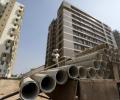
However, the report pointed out that the implementation of the grievance redressal process still has many gaps as "only 22 per cent of the consumers involved in a grievance redressal process were satisfied due to the uncertain timelines involved". The Real Estate (Regulation and Development) Act, 2016, was passed by Parliament in March 2016.

According to the decision, such entities can now first operate through e-commerce and then open brick-and-mortar stores.

Dealers attributed the rupee's fall to fresh demand for USD.

Infosys needs to be more innovative and disruptive with its product and services, keeping its focus on growth.

Rohit Gawli, who co-founded The Lokal Kitchen in the lockdown, shares some interesting career lessons.

The BJP's effort comes in the wake of Commerce and Industry Minister Piyush Goyal set to attend the eighth RCEP ministerial meeting in Bangkok from October 10 to 12.

The first half of 2019-20 will be under pressure, since prices are expected to go up by Rs 7,000-8,000 at a time when sentiment is poor.

Neither the CAA nor the proposed NRC are important enough to stake the well-being of so many or stake economic growth. Getting growth back on track is more important, notes Mahesh Vyas.

'I don't know whether it was the Sabarimala issue that made them reject my film.'

The lawsuit seeks an order declaring the presidential proclamation restriction on issuing new H-1B or H4 visas or admitting new H-1B or H-4 visa holders as unlawful.
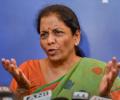
The government was going in the "wrong direction" and it was "highly condemnable" that it did not discuss the proposed changes with trade unions and other stakeholders, says BMS, trade union arm of the RSS.

Stating that COVID-19 has not yet been contained in India, the rating agency in a statement said the government stimulus package is low relative to countries with similar economic impacts from the pandemic. "The COVID-19 outbreak in India and two months of lockdown -- longer in some areas -- have led to a sudden stop in the economy. That means growth will contract sharply this fiscal year (April 2020 to March 2021)," it said. "Economic activity will face ongoing disruption over the next year as the country transitions to a post-COVID-19 world."

The 50-share NSE Nifty settled lower by 94.05 points, or 0.87 per cent, at 10,666.55 after shuttling between 10,586.80 and 10,702.75.

The rupee has declined by 24 paise in four days of losses.

This compares poorly to other developed markets as the average wealth of a person in Australia has increased by over 100 per cent and in Canada by over 50 per cent in the same period.

Given India's low average salaries and large number of jobs in the informal sector, even a small spike in inflation can put poor consumers at risk.

Cloned journals have become more rampant in the post-pandemic world.
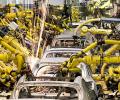
286 dealers closed down in 18 months, 32,000 jobs impacted. Maharashtra leads with 84 closures, followed by Tamil Nadu and Delhi. The worst-hit is the passenger car segment.
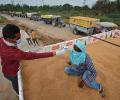
The World Bank on Tuesday projected India's economy to grow at 8.3 per cent in 2021 and 7.5 per cent in 2022, even as its recovery is being hampered by an unprecedented second wave of the COVID-19, the largest outbreak in the world since the beginning of the deadly pandemic. The Washington-based global lender, in its latest issue of Global Economic Prospects released here, noted that in India, an enormous second COVID-19 wave is undermining the sharper-than-expected rebound in activity seen during the second half of Fiscal Year 2020/21, especially in services.

'As the 1991 experience showed, the solution to a large trade deficit may be to open up the economy, not putting up protective walls,' points out T N Ninan.

Spiralling prices pinched the pocket of consumer as edible oil, fuel and many other commodities turned dearer this year amid pandemic-induced disruptions but the inflationary pressure is anticipated to ease, though marginally, in the coming months. As consumers, at retail as well as wholesale levels, are willy-nilly learning to live with the new normal of curbs to contain the spread of coronavirus infections, experts are of the view that elevated inflation is likely to stay longer. After dealing with the devastating blows from the second COVID wave, especially during the April-June period, the economy is well on the revival path but the emergence of Omicron might unsettle the recovery trajectory in the short term.

India's planned transition to electric vehicles will drastically affect the commodities market, says Aditya Gandhi

'India is not so distant from years of high and entrenched inflationary expectations that it should start trying to play games with the economy the way the West's central bankers think they are entitled to,' argues Mihir S Sharma.

Major shareholder Kinnevik, a Swedish investment firm, devalued Quikr by 45%, referring to the exaggerated revenue resulting from fraudulent transactions that rocked the company. Quikr is now valued at about $577 million.

Technology infrastructure solves many problems, but it cannot build roads or bridges and provide clean water. However, such activities are essential for human progress, and their creation provides jobs, says R Gopalakrishnan.

The challenges of transition to stricter emission norm BS-VI from BS-IV and compliance to new safety norms thereby making vehicles costlier are lurking around the sector.

PMI went up from 51.2 points in May to 53.1 in June. Owing to the June figure, PMI for manufacturing stood at 51.9 points in the first quarter of 2018-19 against 51.8 points in the fourth quarter of 2017-18.

Mohan will be responsible for aligning of teams, overall strategy in this country and driving Facebook's investments in India

Delay due to rise in operating cost of telcos, late adoption of 4G network

'There's a lot of confusion. It started because the President's tweet was all-encompassing.' 'It has been watered down over the last few days though to more narrow classes of immigrants.'

Mark Mobius, co-founder, Mobius Capital Partners, tells Puneet Wadhwa that investors should concentrate more on "value" rather than momentum, and on good small- and medium-sized companies rather than large-caps.

'50% of students lose out because of lack of English language skills.' 'Only 15% to 20% have the functional skills companies are looking for.'

Indirect emissions account for a major chunk of emissions by Indian IT firms. Business travel and commutation, together, are a key reason for it. If travel and daily commuting go down, so does carbon emissions.

The $140-billion Indian IT market is facing challenges on multiple fronts including stricter visa regime in key markets and shortage of skilled manpower for new technology areas like data science.
